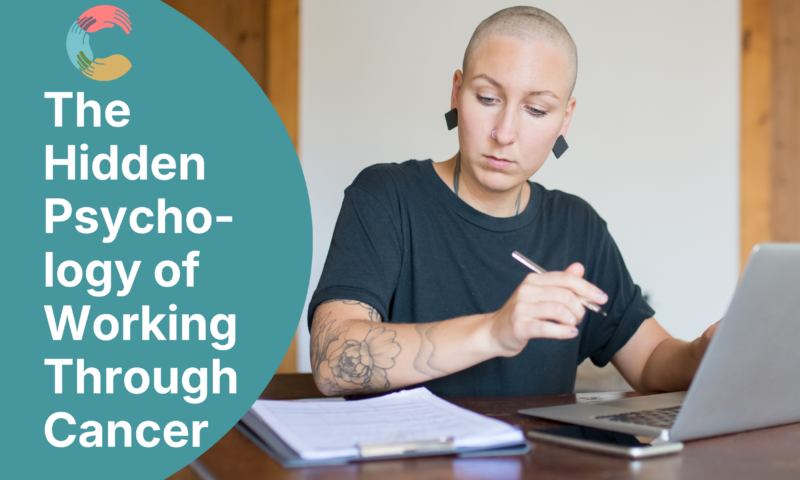
For many professionals, a cancer diagnosis is not only a medical event, it is an identity crisis. Research consistently shows that people navigating cancer in the workplace often wrestle with disclosure, stigma, fears about competence, and concerns about how colleagues may perceive them.
What is less often discussed is the emotional labour involved in trying to remain “normal” while privately enduring treatment, fear, exhaustion and uncertainty.
One recent Cancer Support New Zealand participant described spending months protecting her professional identity while quietly undergoing treatment for breast cancer.
“I didn’t want people to know that I had cancer.”
Her words reflect what occupational health researchers describe as the burden of managing an “invisible stigma” at work, a condition that can be concealed, disclosed selectively, or hidden entirely depending on psychological safety and workplace culture.
“I felt shamed to be the person with cancer,” she said.
Importantly, she does not describe overt discrimination. Instead, she articulates something more psychologically complex: the fear of becoming professionally redefined.
“I couldn’t believe this was me. It was happening to me.”
Studies on workplace cancer stigma have found that many survivors worry colleagues or employers will question their reliability, productivity, competence or future capacity. Even when those fears are never openly expressed by others, the anticipation of being viewed differently can profoundly shape behaviour.
For this participant, that meant silence.
“I had people who had no idea nine months into it that I was on this journey.”
This kind of compartmentalisation is psychologically exhausting. Research into disclosure decisions across workplaces shows that employees managing invisible illnesses often weigh emotional authenticity against career protection. The result can be a constant state of self-monitoring: deciding who to tell, what to reveal, and how much vulnerability feels safe.
At the same time, maintaining normal routines can become a survival mechanism.
Throughout treatment, one of the most stabilising aspects of her week came through programmes offered by Cancer Support New Zealand.
“It’s given me some structure in my life.”
“It’s just this place of Zen for me.”
She describes attending online Pilates sessions that became far more than exercise classes. The breathing techniques and grounding exercises became tools she relied on during late-night anxiety.
“I have used [them] in my moments of, you know, 11pm and 2am anxiety.”
The psychological value of these interventions is strongly supported in psycho-oncology research. Studies examining mindfulness-based and movement-based interventions in cancer care have shown improvements in anxiety, emotional regulation, stress reduction and overall quality of life.
What stands out in her account is not dramatic transformation, but restoration of control.
Cancer strips predictability from daily life. Structured support programs, whether exercise, mindfulness, peer support or therapeutic education, can quietly rebuild rhythm, agency and emotional safety.
Yet even as she expresses deep gratitude, she remains conflicted about public advocacy.
“I’m just a bit concerned about being the public front.”
That matters. Public narratives around cancer often reward visibility, openness and inspiration. But many people experiencing illness do not immediately want to become symbols of resilience. Some simply want to remain themselves.
Her hesitation highlights a reality workplaces and society still struggle to understand: support does not always require public disclosure.
Employees navigating cancer may continue working, leading teams, meeting deadlines and appearing composed while privately managing fear, treatment side effects and profound identity disruption.
The challenge for employers is not simply offering support after disclosure. It is creating cultures where employees feel safe enough to disclose at all.
Research suggests that psychologically safe workplaces, where employees trust they will not be judged, sidelined or professionally diminished, significantly influence whether people feel comfortable sharing health challenges.
For many workers, the question is not: “Will people be kind?” It is: “Will people see me differently afterwards?”
That distinction may explain why so many people continue working through cancer in silence.
And why programs that restore dignity, routine and emotional grounding can become lifelines.

New research published in The Lancet Oncology Commission: The Human Crisis in Cancer shines a stark light on what many people already...
Read more
There’s a moment that doesn’t get talked about enough. Not the diagnosis, nor the treatment plan, but rather the moment you...
Read more

When most people think about cancer care, they think about hospitals, specialists, surgery, chemotherapy and radiation treatment. These services are...
Read more
Join our community and stay up to date on our latest programmes, resources, news and events.
Cancer Support New Zealand — home of the Look Good Feel Better programme — Learn more