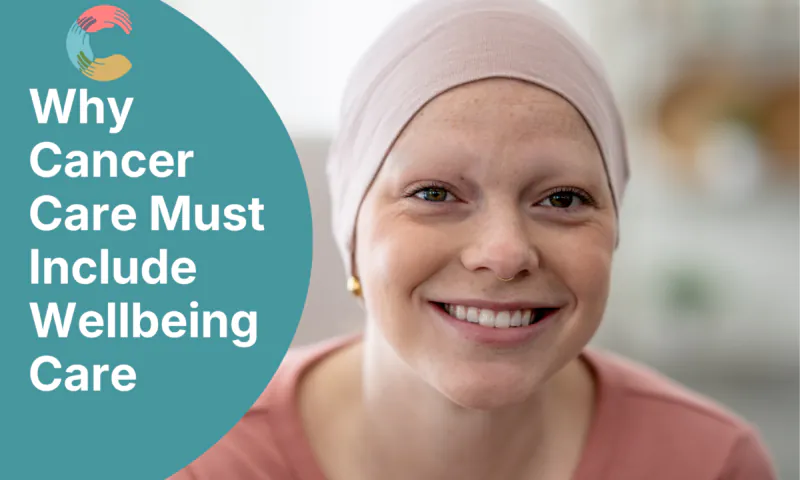
When most people think about cancer care, they think about hospitals, specialists, surgery, chemotherapy and radiation treatment.
These services are essential. They save lives.
However, a growing body of evidence suggests that treating cancer and supporting wellbeing are not the same thing.
The Ipsos Cancer Wellbeing Tracker, commissioned by Cancer Support New Zealand, highlights that people affected by cancer face a wide range of challenges that extend beyond their diagnosis and treatment. Emotional distress, fatigue, physical changes, social isolation, workplace pressures and uncertainty about the future all influence how people experience cancer and their quality of life during and after treatment. Fatigue is the most common of these, experienced by 7 in 10 Cancer Sufferers, while emotional impact (59%) and difficulty sleeping (57%) are each felt by more than half.
Historically, healthcare systems have focused primarily on clinical outcomes such as survival rates, treatment effectiveness and recurrence. While these remain critically important, there is growing international recognition that wellbeing outcomes matter, too.
People want more than survival.
They want to be able to work, maintain relationships, care for their families, participate in their communities and enjoy meaningful lives after cancer.
This shift reflects a broader understanding of health. The World Health Organisation defines health as not merely the absence of disease, but a state of physical, mental and social wellbeing. Cancer can affect each of these dimensions simultaneously.
The Ipsos Cancer Wellbeing Tracker found that emotional wellbeing often remains significantly impacted during and after cancer, with many people reporting ongoing challenges long beyond active treatment.
Importantly, the research also identifies areas that support improved wellbeing. Exercise, social connection, self-care, information and emotional support all contribute positively to how people cope with and recover from the impacts of cancer. A quarter of Cancer Sufferers (26%) name exercise as the single non-medical thing with the biggest impact on their wellbeing, ahead of spending time with family and friends (14%) and eating well (8%).
These findings are important because they challenge a common misconception that wellbeing support is simply a “nice to have.” In reality, supporting wellbeing helps people manage treatment, maintain independence, reduce isolation and improve their ability to engage in daily life.
As New Zealand’s cancer population continues to grow, this distinction becomes increasingly important.
The future of cancer care cannot simply focus on helping people survive cancer.
It must also help people live well through and beyond it.
Organisations such as Cancer Support New Zealand play an important role in filling this gap by providing practical, emotional and human support that complements clinical care. While clinical care treats the disease, community-based support helps people navigate the realities of living with cancer.
The most effective cancer care system is not one that chooses between clinical outcomes and wellbeing outcomes.
It is one that values both.
As New Zealand’s cancer population continues to grow, access to practical, emotional and social support will become increasingly important alongside medical treatment. The IPSOS Cancer Wellbeing Tracker highlights that people benefit from the very things often overlooked in traditional cancer care – exercise, connection, information, self-care and emotional support.
This is where organisations such as Cancer Support New Zealand have an important role to play. Through free movement and wellbeing classes, expert-led educational programmes, supportive communities and practical resources, we help people affected by cancer navigate the challenges that continue long after diagnosis and treatment.
While we cannot remove the cancer experience, we can help people build confidence, strengthen wellbeing and feel more supported through it. As the evidence continues to show, wellbeing support is not an optional extra – it is an important part of helping people live well during and beyond cancer.
To learn more about Cancer Support New Zealand’s programmes, classes and resources, explore our website.
Cancer and Employment: The Workplace Challenge We Don’t Talk About Enough A cancer diagnosis does not arrive at a convenient...
Read more

When Cancer Changes How You See Yourself When people talk about cancer, the focus is often on the physical side...
Read more
Exercise Might Be One of the Most Underused Cancer Interventions When people hear the word exercise during cancer treatment, their...
Read more
Join our community and stay up to date on our latest programmes, resources, news and events.
Cancer Support New Zealand — home of the Look Good Feel Better programme — Learn more