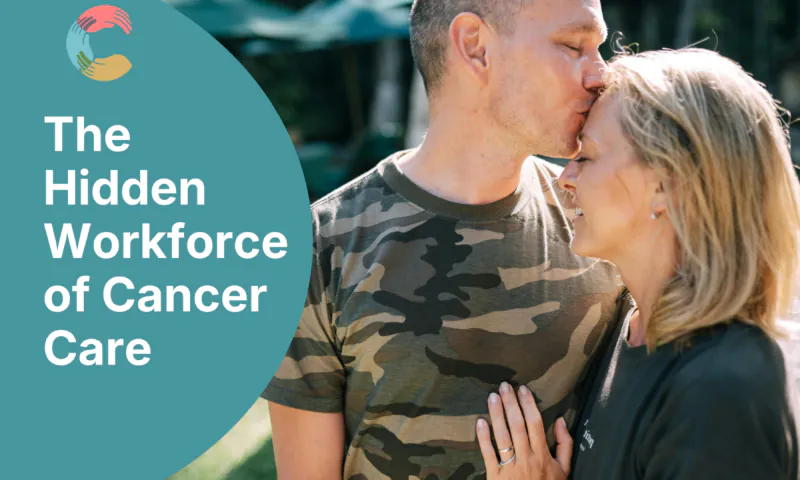
Cancer is often described as a personal journey.
In reality, it rarely affects just one person.
Behind every diagnosis is a network of partners, parents, children, siblings, friends and colleagues who are also carrying the weight of cancer in their own way. Yet their experiences are often overlooked in discussions about cancer care.
The Ipsos Cancer Wellbeing Tracker, commissioned by Cancer Support New Zealand, devoted significant attention to supporters and carers, recognising the critical role they play in helping people navigate treatment, recovery and everyday life. Nearly a third (32%) of Cancer Supporters report poor wellbeing, and those in a secondary support role score notably lower (13.9) than main supporters (15.5).
Many supporters become appointment coordinators, drivers, advocates, cooks, childcare providers and emotional anchors all at once. They often take on these responsibilities while continuing to manage their own employment, financial commitments and family responsibilities.
For some, these additional responsibilities continue for months or years.
Research consistently shows that carers can experience high levels of stress, anxiety, exhaustion and emotional strain. Half of Cancer Supporters (51%) rarely or never talk to anyone about how they themselves are coping, and those who never do report significantly poorer wellbeing (12.8) than those who talk frequently (15.7). Despite this, they often feel unable to prioritise their own wellbeing because the focus remains rightly on the person diagnosed with cancer.
This creates a hidden challenge.
When supporters become overwhelmed, the impact extends beyond their own wellbeing. It can also affect the resilience of the support system surrounding the person with cancer.
Previous New Zealand wellbeing research commissioned by Cancer Support NZ identified the importance of social support, finding that people with stronger support networks reported better wellbeing outcomes than those with limited support.
The implication is clear.
Supporting carers is not separate from supporting patients. The two are deeply connected.
Organisations providing cancer support services increasingly recognise that family-centred approaches are essential. Information, peer support, practical resources and opportunities for emotional connection can help supporters sustain their own wellbeing while continuing to support others.
As cancer incidence grows and more people live longer with cancer, informal carers will become an increasingly important component of New Zealand’s cancer support system.
They are, in many ways, the hidden workforce of cancer care.
And they deserve support too.
At Cancer Support New Zealand, we are excited to be part of the growing conversation about what comprehensive cancer care should look like in the future. The IPSOS findings reinforce the importance of supporting the wider impacts of cancer and recognising the vital role that carers, supporters and whānau play throughout the cancer experience.
As we continue to develop our programmes and services, we look forward to contributing to a future where emotional, social and practical wellbeing support is available for anyone impacted by cancer.

Media Release: 12 May There’s nothing more sobering than cancer: Go Dry This July for Cancer Support Registrations for 2026...
Read more
Exercise Might Be One of the Most Underused Cancer Interventions When people hear the word exercise during cancer treatment, their...
Read more

When most people think about cancer care, they think about hospitals, specialists, surgery, chemotherapy and radiation treatment. These services are...
Read more
Join our community and stay up to date on our latest programmes, resources, news and events.
Cancer Support New Zealand — home of the Look Good Feel Better programme — Learn more