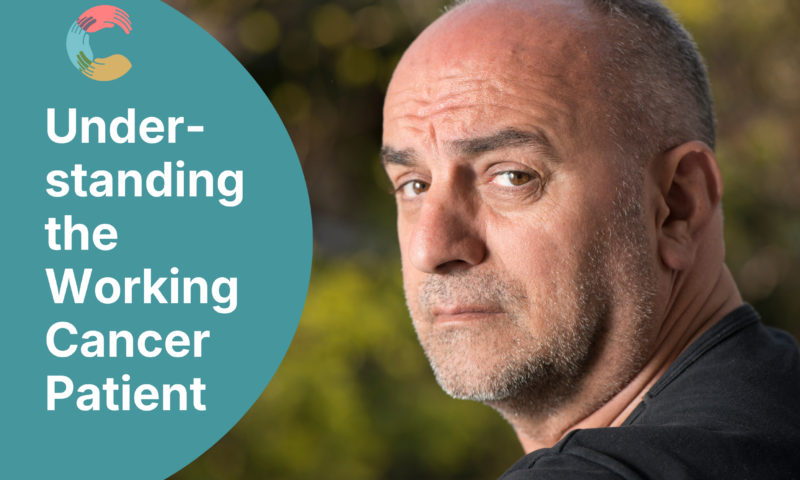
Understanding the working cancer patient and what they face in the working environment is an important part of whole-person cancer support.
Healthcare professionals are increasingly aware that cancer survivorship extends far beyond tumour response and treatment completion. Yet many patients continue to experience a hidden psychological burden that remains largely invisible in clinical conversations: maintaining identity, work capability and emotional control while trying not to become “the person with cancer.”
Research into cancer survivorship and employment shows that stigma, disclosure anxiety and fears about workplace perception remain significant concerns for many patients.
One former pharmaceutical sales professional described concealing her diagnosis from much of her professional network throughout treatment.
“I chose to tell very few people.”
“I didn’t want people to know that I had cancer.”
Her reflections reveal a clinically important insight: even medically literate patients may experience shame, identity disruption and reluctance to disclose illness.
“I felt ashamed to be the person with cancer.”
Importantly, this was not driven by denial of illness. Rather, it reflected concerns around professional identity and social positioning.
“There are people who were important in my career who have no idea that I’ve been sick.”
Occupational and psycho-oncology literature increasingly recognises that cancer can function as an “invisible stigma” in workplace settings. Patients may fear being perceived as less capable, less reliable or professionally vulnerable.
For clinicians, this has significant implications.
Patients who continue working during treatment may appear outwardly high functioning while internally navigating profound anxiety, identity instability and emotional isolation. Many are simultaneously managing treatment decisions, financial strain and disclosure dilemmas.
This patient openly acknowledged the economic impact of modern cancer care.
“I’ve just spent my superannuation paying for Keytruda.”
Her comment reflects a growing survivorship issue internationally: the intersection of financial burden, professional identity and psychological distress.
Yet what proved most meaningful to her was not a medical intervention.
It was supportive care.
Through programmes offered by Cancer Support New Zealand, she found grounding through regular Pilates and wellbeing sessions.
“It’s given me some structure in my life.”
“It’s one of the most meaningful things.”
She described using breathing and regulation techniques learned in class during episodes of nighttime anxiety.
“I just go back to some of those techniques.”
This aligns strongly with current evidence in psycho-oncology. Mindfulness-based and exercise-focused interventions have been associated with reductions in anxiety, distress and treatment-related psychological symptoms among cancer patients and survivors.
For healthcare professionals, her experience reinforces several important considerations.
First, supportive care interventions should not be framed as “adjunct” or secondary to treatment. For many patients, these services become central psychological stabilisers during prolonged uncertainty.
Second, patients may engage more readily with programmes that restore confidence, routine and agency rather than those centred purely on emotional disclosure.
Healthcare professionals often witness the biological realities of cancer. What may be less visible is the enormous psychological work many patients undertake simply to preserve identity, dignity and normalcy while treatment unfolds.
Understanding that hidden labour may be one of the most important forms of supportive care clinicians can provide.
The Quiet Psychology of Cancer Survivorship There’s a version of cancer survivorship that the world understands well. It’s visible, public...
Read more

Supporting Staff Through Cancer: What Your People Need Isn’t What You Think Most employers won’t feel fully prepared for the...
Read more

What Someone Who’s Been Through Treatment Wishes They Had Known When people are first diagnosed with cancer, much of the...
Read more
Join our community and stay up to date on our latest programmes, resources, news and events.
Cancer Support New Zealand — home of the Look Good Feel Better programme — Learn more